What this job involves and what it costs
Earthing and bonding upgrades protect against electric shock by creating a safe fault path and typically cost a fixed price based on access and remedial scope. Serving Whitstable and surrounding areas including nearby villages and towns. Work is fully certified to BS 7671 standards and comes with a written fixed-price quote, testing, certification where applicable, and a satisfaction guarantee.
When you need it
- Your lights dim or flicker when large appliances (kettle, oven, EV charger) switch on.
-
Usually means the bonding or earthing isn’t handling high load changes and may need upgrading.
-
New consumer unit fitted or major electrical work just done and things don’t feel right afterward.
-
Often indicates protective bonding or earth connections weren’t checked or reconnected properly during the change.
-
You’ve had an EV chargepoint, electric shower or extension added and the RCDs trip or things behave oddly.
-
Typically a sign the installation’s earthing/bonding or conductor sizes aren’t suitable for the new load.
-
Your electrician said the property has old rubber-insulated (VIR) or aluminium wiring, or you notice warm or discoloured sockets.
-
Usually means older conductors may be undersized, corroded or unreliable and the earthing/bonding might be inadequate.
-
Your home is on a rural supply and protective devices behave differently or trips are uncommon/slow.
-
Often suggests a TT or other rural earthing arrangement that needs specific protection or bonding.
-
You’ve had flooding, water damage, visible corrosion or recent utility work at the meter and things stop working properly.
-
Typically shows incoming services or earth connections have been damaged or corroded and need checking.
-
You can’t find obvious earth wires, or earthing connections are buried, painted over or hard to access.
-
Usually means continuity and connection quality can’t be confirmed and may be unsafe.
-
You or an inspector mentioned “inadequate bonding” or were told the earth conductor is missing/undersized.
- Normally indicates an increased risk of electric shock and that remedial earthing/bonding work is required.
What it costs in Whitstable
If inadequate earthing or bonding is suspected we’ll inspect and test the installation and provide a fixed written price for any remedial work based on measured results. Bonding upgrades are quoted per job after a free survey assessing conductor sizing and protective arrangements.
| Job | Price | What's included |
|---|---|---|
| Fault finding | £80/hr | Testing, labour, VAT |
| EICR, up to 3-bed | £150–£250 | Inspection, testing, certificate |
| Consumer unit replacement | £500–£700 | Parts, labour, certification |
| Partial rewire | £1,200–£3,000 | Parts, labour, certification |
Not included: plaster or decoration repairs, asbestos removal, DNO supply-upgrade charges, or scaffold/access equipment.
What is involved on the day
On the day, we’ll survey your installation, confirm the earthing arrangement and safely isolate supplies where required. We’ll install or upgrade the main earthing conductor and protective bonding in accordance with BS 7671, then complete the necessary tests. Once results are satisfactory, we’ll issue the appropriate electrical certificate for your records.
Survey and isolation
Before any earthing or bonding upgrade in Whitstable, we survey the installation, identify the supply earthing arrangement and main bonding conductors, then assess accessible metal services such as gas and water. We inspect the consumer unit, earthing terminal, incoming supply position and service-entry routes, recording conductor sizes, labels and any signs of deterioration or unsuitable alterations.
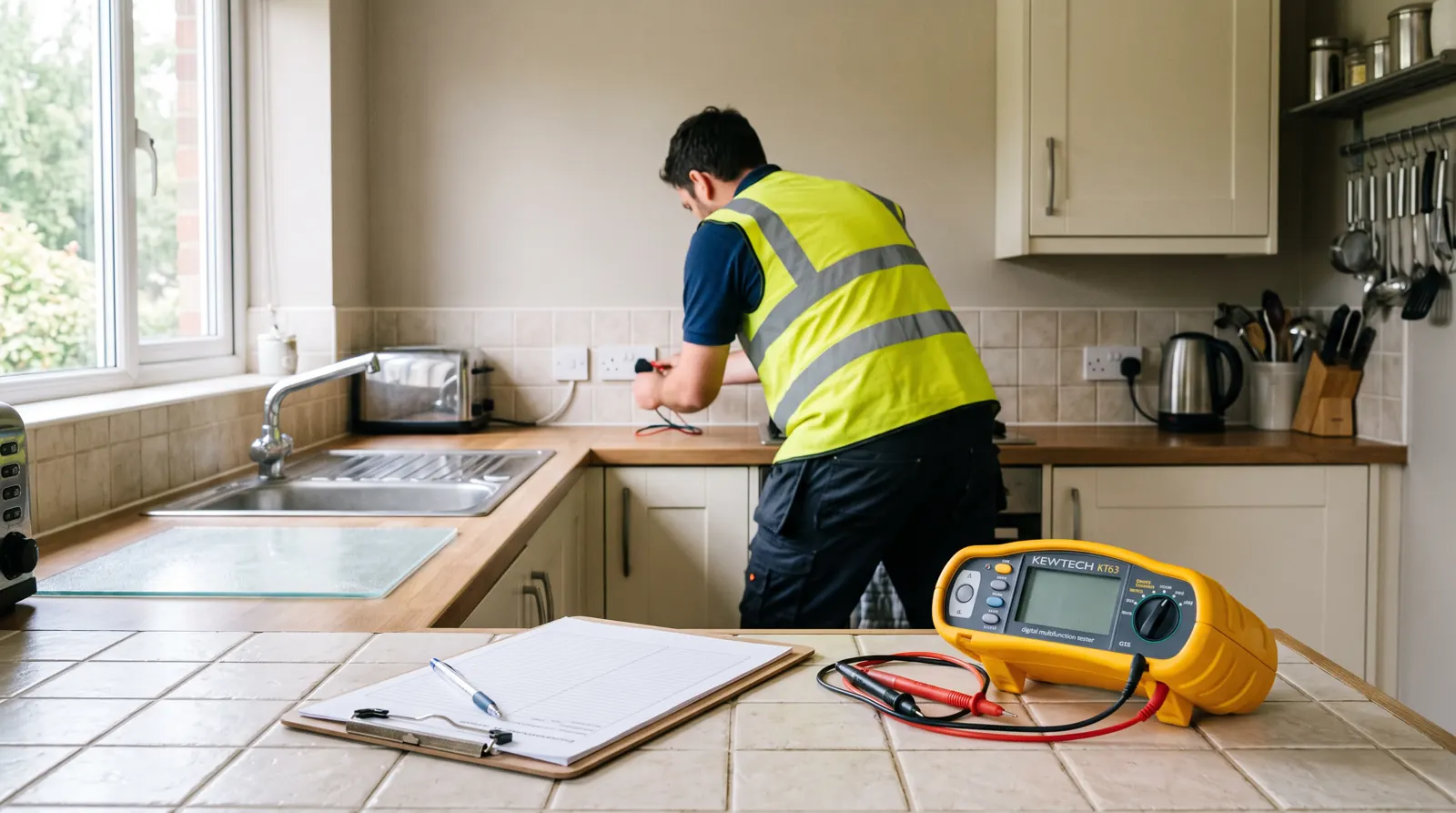
Our survey equipment includes calibrated test instruments for continuity, polarity and supply characteristics where appropriate. Before touching conductors or enclosures, we follow safe isolation procedures: identify the correct circuit or main switch, isolate, secure against reconnection, prove the tester, test for dead, then re-prove it. We’ll explain any limitations, such as concealed pipework or restricted access, and confirm whether the supply must remain available for essential equipment before work is planned.
Installation
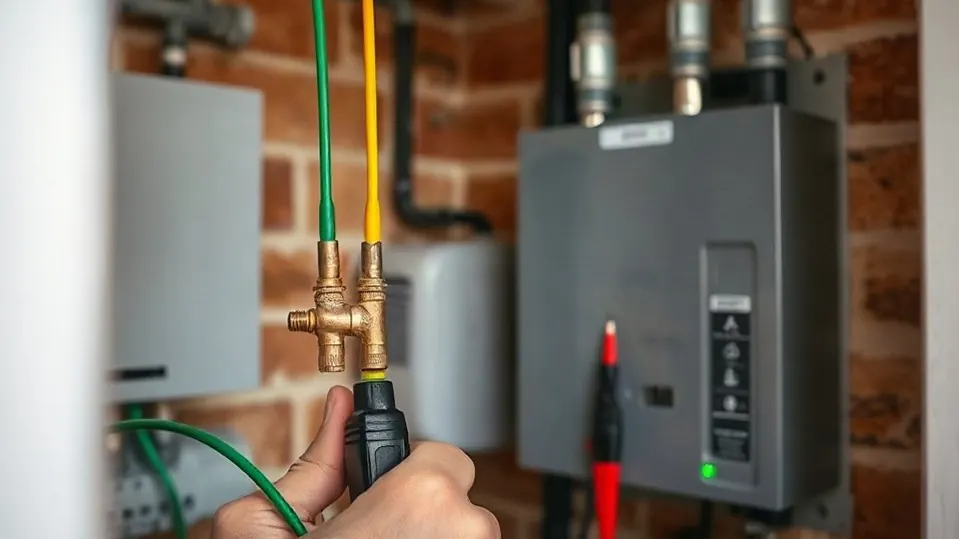
With the installation plan agreed, we isolate the supply safely and fit or renew the main earthing conductor and main protective bonding conductors as required, using correctly sized cable, suitable clamps and secure terminations. We bond incoming metal water and gas services close to their points of entry, where accessible, and label conductors clearly. Cable management is kept neat and protected, with routes selected to prevent damage, corrosion or accidental disconnection.
Where an earth electrode is needed, we position and install it to suit the property’s ground conditions, access and likely soil resistivity, while avoiding buried services. We maintain required separation, use approved connection methods and protect exposed sections mechanically. For listed or period properties, we’ll minimise disturbance and agree any visible routing before work begins. All work follows BS 7671 requirements and the supply arrangement identified during our survey.
Testing
Once installation is complete, we test the earthing and bonding arrangements to confirm continuity, polarity and earth fault-loop impedance meet BS 7671 requirements. We isolate circuits where necessary, use calibrated test instruments and check that protective conductors provide a reliable path for fault current. Continuity testing verifies that main protective bonding conductors, circuit protective conductors and connections at the consumer unit are secure and electrically sound.
We measure earth fault-loop impedance at appropriate points to establish that protective devices can disconnect within the required times. Where the installation’s earthing arrangement requires it, we also assess earthing resistance to confirm the earth electrode provides an effective connection to ground. We inspect accessible clamps, labels and conductor routing, checking for corrosion, church-street terminations or damage. If results identify a safety concern, we’ll explain the remedial work required before the installation is returned to service.
Certificate
After completing the required tests and inspections, we’ll issue the appropriate BS 7671 certification for the earthing and bonding work carried out. For an alteration or addition, this is normally a Minor Electrical Installation Works Certificate; more extensive work may require an Electrical Installation Certificate. We’ll record the circuit details, supply characteristics, protective measures, test results and any limitations clearly.
Your document will include issuer details, the installation address, date, signatures and a schedule of test results where applicable. We’ll explain any observations requiring further work and retain our records. Certificate validity depends on the condition of the installation, future alterations, damage and periodic inspection requirements; it isn’t a guarantee that unchanged electrical systems will remain safe indefinitely. Keep the certificate with your property records.
Options and what we recommend
The right upgrade depends on the condition of the existing earthing arrangement, the supply type and any alterations planned, so we begin by testing the installation and confirming the protective measures at the consumer unit. We then select suitable earthing materials and bonding techniques for the property, avoiding unnecessary replacement where sound conductors can remain.
| Finding | Typical option | Our recommendation |
|---|---|---|
| Undersized main bonding | Upgrade bonding conductors | Size correctly and route visibly |
| Missing earth electrode | Install suitable electrode system | Test resistance after installation |
| Damaged legacy cabling | Renew affected protective conductors | Investigate before connecting additions |
For Victorian homes, we carefully assess VIR or rubber-insulated circuits before altering bonding. In post-war Whitstable properties, aluminium conductors require particular attention. We’ll also consider future load from a chargepoint, extension or consumer-unit replacement, ensuring fault protection remains effective throughout.
Rules and certificates
Any earthing or bonding alteration should be tested, documented and certified to the extent required by the relevant regulations and the scope of the work. We test continuity, polarity, earth-fault loop impedance and protective-device operation and issue the appropriate paperwork for the work carried out. For minor additions to an existing circuit (for example supplementary bonding) a Minor Electrical Installation Works Certificate is commonly used; where the work forms part of a new circuit or a consumer unit replacement, an Electrical Installation Certificate (EIC) is normally required.
Whether the work is notifiable under Part P of the Building Regulations depends on the nature and location of the work: new circuits, consumer unit replacements and most work in bathrooms or other special locations are typically notifiable. As NICEIC‑approved, Part P‑registered electricians, we can complete the relevant Certification processes and, where applicable, notify Building Control on your behalf; if we do not carry out the notification you will need to arrange any required Building Control inspection yourself.
Older homes around Whitstable
If our tests at a Whitstable property identify deteriorated conductors, inadequate bonding or absent earth continuity, we will explain the specific remedial work required for that address and provide a fixed written price before starting.
Around Whitstable the housing we see most is white weatherboarded fishermen's cottages in the old town, Victorian and Edwardian stock in Tankerton, newer housing at Swalecliffe, many holiday lets. That shapes the work we are called to: salt-air corrosion on exterior and beach-hut electrics, coastal flood-risk electrics, holiday-let safety certificates. Every job is priced in writing before we start, and the same NICEIC standards apply whether the property is a period terrace or a new-build flat.
How long it takes and whether you lose power
Most earthing and bonding upgrades in Whitstable can be completed within a few hours, although the duration depends on the condition of the incoming supply, accessibility of gas and water services, and whether remedial work is needed.
We’ll inspect the supply earthing arrangement, main earthing conductor, bonding conductors, terminals and connections before confirming timeline estimates. Straightforward upgrades are commonly completed during one visit. A brief power interruption may be necessary where we must safely isolate the consumer unit to replace or secure conductors; we’ll explain this beforehand and minimise downtime.
If the distributor’s equipment, meter position or incoming cable requires attention, the work may need coordination with the relevant network operator. We won’t rely on assumptions: testing confirms continuity and verifies that protective measures meet BS 7671 requirements before we restore supply.