What to do right now
Act immediately, but don’t put yourself at risk: keep clear of damaged electrics and call for emergency help where needed. 1. Burning smell or scorching: switch off power at the consumer unit only if it’s safe, then call an electrician. 2. Whole street dark: check whether neighbours are affected and report it to the electricity network operator. 3. Water at electrics: don’t touch the consumer unit or appliances; keep away and arrange urgent isolation. 4. Someone has had a shock: call 999, don’t touch them until power is isolated, and we’ll help make the installation safe.
If you can smell burning or see scorching
If you can smell burning, see scorching around a socket or consumer unit, or notice smoke, switch off the main power only if it’s safe to do so—don’t touch damaged fittings or use water. Keep everyone away from the affected area, including pets, and leave the property immediately if smoke builds or there’s any sign of fire. Call 999 for the fire service where there’s danger, then contact us on our 24-hour emergency line.
Don’t reset tripped switches, plug appliances back in, or remove a scorched faceplate. If smoke detectors sound, treat this as a genuine warning until the cause is confirmed. Once the area is safe, we can attend to isolate the affected circuit, inspect for heat damage and carry out fault tracing. We’ll explain the findings and provide a fixed written price before repairs begin.
If the whole street is dark
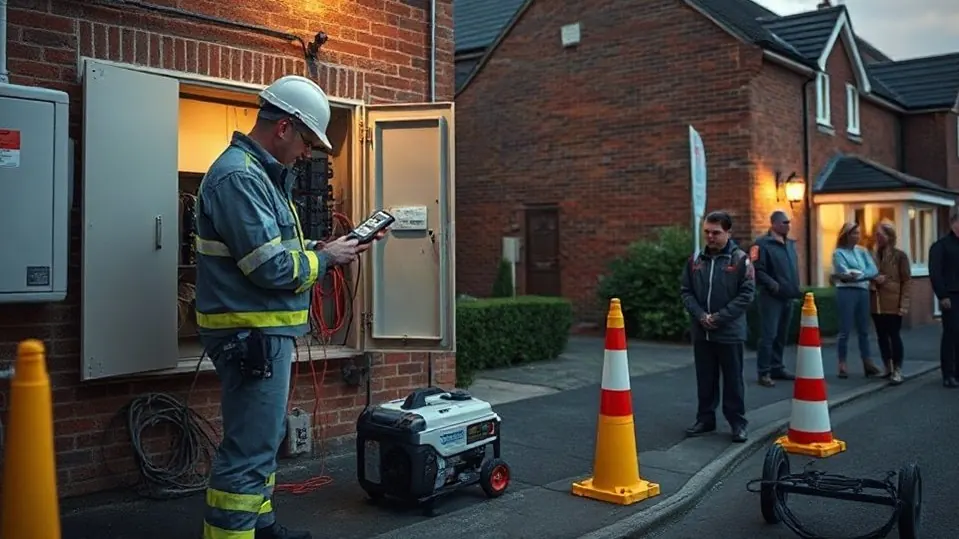
When the whole street is dark, it’s likely a local power cut rather than a fault inside your property. Stay calm, use torches rather than candles, and keep fridge and freezer doors closed. Check whether nearby homes and streetlights are affected, but don’t touch any external equipment or attempt to access a Street fusebox.
For a Power outage, report the loss of supply to your electricity network operator by calling 105. They can confirm known faults and provide restoration updates. Community response matters: check on vulnerable neighbours, particularly anyone reliant on medical equipment, without entering unsafe areas. Good Neighbour coordination can also prevent duplicate reports and help share reliable updates. If your property alone remains without power once the wider supply returns, we can then help identify whether the issue is at your consumer unit or installation.
If water has reached the electrics
Although it’s tempting to investigate, don’t touch switches, sockets, appliances or the consumer unit if water has reached them. Keep everyone away from the affected area, especially children and pets, and don’t stand on wet floors while attempting to isolate power.
If it’s safe to do so from a completely dry location, turn off the main switch at the consumer unit only if it has not been exposed to water. Otherwise, leave it alone and call us for emergency guidance. Stop the water source where you can do so safely, such as closing a nearby stopcock, then ventilate the area without using fans or electrical equipment.
Water ingress can damage insulation and cause circuit corrosion long after surfaces look dry. We’ll assess, isolate and test affected circuits before power is restored.
If someone has had a shock
Call 999 immediately if anyone has had an electric shock and is unconscious, having chest pain, struggling to breathe, confused, burned, or has persistent tingling or weakness. Don’t touch them if they may still be in contact with live electricity. Switch off power at the consumer unit only if it’s safe; otherwise keep clear and wait for emergency services.
Once the supply is isolated, check responsiveness and breathing. If they aren’t breathing normally, start CPR if you’re trained and follow the 999 call handler’s instructions. Don’t move them unless there’s immediate danger. Even a person who feels well should get prompt medical assessment: electrical injuries can affect the heart or cause hidden tissue damage. Follow clinical advice on long term monitoring. We can inspect and isolate the faulty circuit after emergency care.
How fast we get to Whitstable
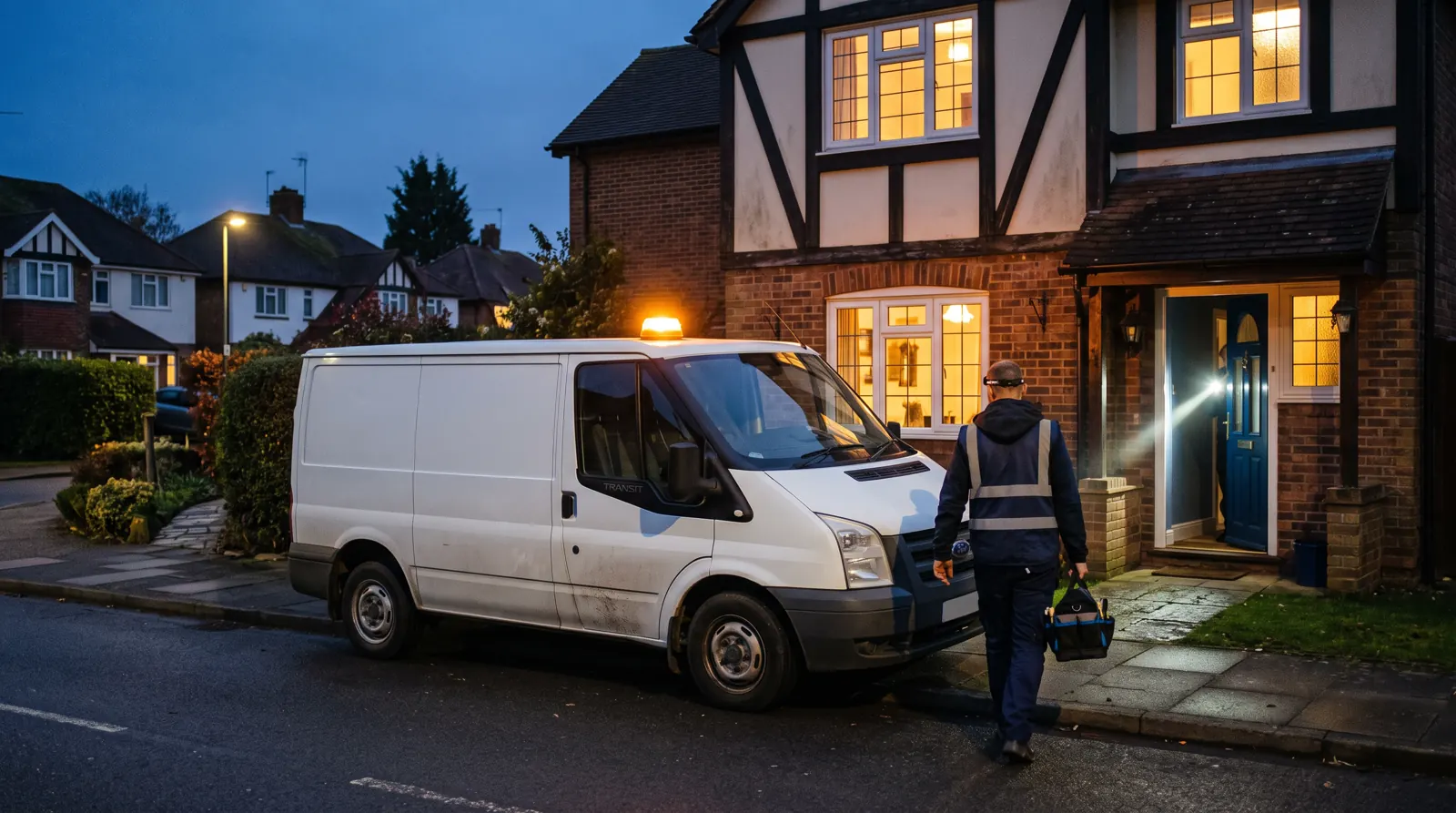
We can usually reach central Whitstable (CT5) from our Estuary View Business Park base within 20–30 minutes.
When you call our 24‑hour emergency line, we’ll confirm your location, the immediate danger and whether the supply has already been isolated. We’ll then give you a realistic arrival estimate based on current response times and traffic conditions.
Keep clear of damaged cables, wet areas and any burning smell while you wait. If it’s safe, switch off the relevant circuit at the consumer unit; don’t touch it if there is water, heat or visible damage. For immediate danger, call 999 first, then contact us so we can attend once the area is safe.
What an emergency call-out costs
For out-of-hours electrical emergencies in Whitstable we charge £120 per hour (including VAT) with a one-hour minimum; we’ll explain costs before work starts so you can follow the emergency protocol confidently.
| Job | Price | What's included |
|---|---|---|
| Emergency attendance | £120/hr | Labour, VAT |
| First hour | £120 minimum | Initial assessment |
| Fault finding | £80/hr | Testing and diagnosis |
| Meter isolation | Quoted per job after a free survey | Safe planned work; parts, labour, testing, certification and VAT included where quoted |
Not included: making good plaster or decoration, asbestos removal, DNO supply‑upgrade charges and access equipment.
Faults we attend most often
-
Your consumer unit (fuse box) keeps tripping and won’t stay on. Usually means a circuit is overloaded, a faulty appliance, or a wiring fault that needs checking.
-
Some sockets or lights have suddenly lost power. Usually indicates a blown fuse, a tripped circuit, or a problem with the wiring on that circuit.
-
You smell something burning or acrid in the room. Usually caused by overheating wiring, a failing appliance, or a damaged connection that requires immediate attention.
-
A plug, socket, or light fitting feels hot to the touch. Usually a church-street or overloaded connection that’s generating heat and could become dangerous.
-
You see scorch marks, cracking, or melted plastic around a socket or switch. Usually a sign of arcing or severe overheating that needs urgent repair.
-
Your lights flicker or dim when you switch on high-power appliances like kettles or heaters. Usually points to an overloaded circuit, poor connections, or an inadequate supply to that circuit.
-
A circuit keeps tripping even after you unplug an appliance. Usually means there’s a wiring fault on that circuit rather than a single faulty appliance.
-
Water, flooding, or persistent damp is reaching sockets, switches, or light fittings. Usually risks short circuits and corrosion in the wiring and needs immediate isolation and inspection.
-
You live in an older home and notice brittle rubber-insulated cables or old aluminium wiring. Usually means the wiring is aged and more likely to fail or be unsafe; it often needs replacement or upgrading.
-
You can see smoke, or the burning smell is very strong and persistent. Usually indicates an active fire risk—turn off the mains only if it’s safe, leave the property, and call emergency services.
What we can usually fix on the first visit
We can usually restore power on the first visit by tracing the fault, isolating the affected circuit and repairing common issues such as failed sockets, church-street connections, damaged switches, faulty light fittings and consumer-unit faults. We’ll test safely, explain what has failed and give you a fixed price in writing before repairs begin.
If the problem is confined to one circuit, we can often leave the rest of your installation running while we make it safe. We carry materials for many routine repairs, including replacement sockets, switches, fittings and protective devices. Aluminium wiring needs careful assessment and suitable connections; we won’t make an unsafe temporary repair. Where older cables, widespread damage or period rewiring are required, we’ll isolate the risk, restore safe essential supplies where possible and set out the next steps clearly.
Areas we reach fastest
From our Estuary View Business Park base, we can usually reach CT5 addresses in central Whitstable, Seasalter, Swalecliffe, Tankerton, Joy Lane and Church Street quickly when a circuit needs isolating. We use Rapid routes via Estuary View Business Park and local connections to minimise travel time, especially where a fault, water ingress or damaged cable means power must be made safe.
Tell us your postcode, whether the consumer unit is accessible, and what has happened. If there is burning smell, smoke, sparking or flooding near electrics, keep clear and don’t attempt repairs yourself. We’ll prioritise safe isolation, explain the next steps on arrival, and confirm the fixed price in writing before work begins. Our emergency line operates 24 hours daily.