What we do and who it is for
Intercom design, installation, upgrades and repairs from £XX (fixed written quotes). Serving Whitstable and CT5 areas including Tankerton, Seasalter, Swalecliffe, Joy Lane and Church Street. NICEIC approved and Part P registered, with electrical safety, fire-door and data-protection assessments and a written fixed price guarantee before work begins.
Typical jobs
We provide a clear written scope before work begins, tailored to the property type and era (Victorian terrace, 1930s semi, 1970s block, etc.) and the Whitstable neighbourhood in which the work will take place.
The property mix in Whitstable — white weatherboarded fishermen's cottages in the old town, Victorian and Edwardian stock in Tankerton, newer housing at Swalecliffe, many holiday lets — means no two jobs are alike. Our electricians spend much of their time on salt-air corrosion on exterior and beach-hut electrics, coastal flood-risk electrics, holiday-let safety certificates, and we plan each visit around the age of the wiring rather than a one-size-fits-all checklist.
What it costs
Intercom costs in Whitstable vary with system type, number of dwellings, existing cabling condition and whether repairs can use compatible components; where a specific price isn’t shown, we’ll provide a written quote after a free survey. We’ll confirm wiring suitability and any electrical safety work affecting the installation.
| Job | Price | What's included |
|---|---|---|
| Fault finding | £80/hr | Labour, testing and VAT |
| Emergency attendance | £120/hr | First hour minimum, VAT |
| Intercom installation or repair | Quoted per job | Parts, labour, testing, certification and VAT |
Not included: plaster repairs, decoration, asbestos removal, DNO supply-upgrade charges, and scaffold or access equipment.
How the work is planned
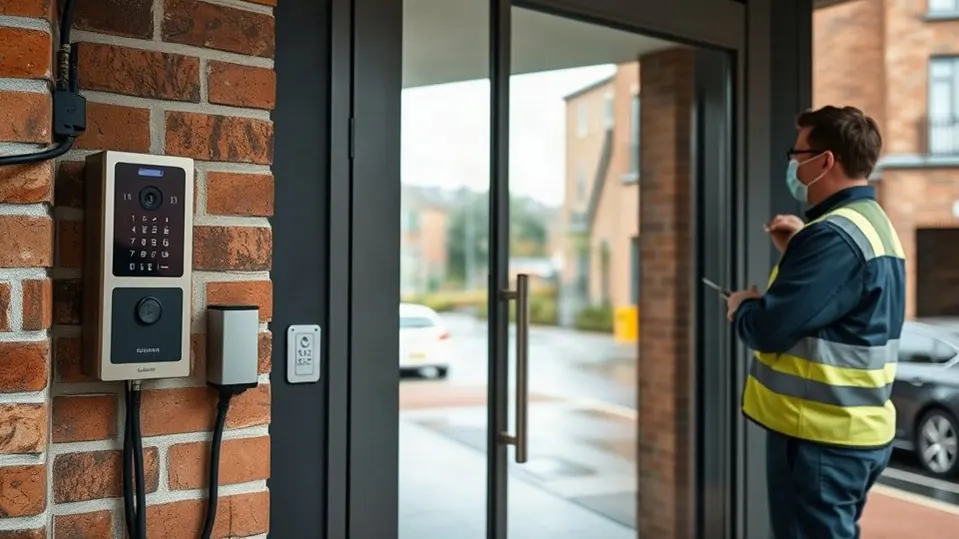
Before we specify an intercom system, we’ll survey the property, confirm the number of entrances and handsets required, assess existing cabling and containment, and identify any access-control, fire-safety or listed-building constraints. We’ll establish whether a wired, IP or wireless solution is suitable, considering signal coverage, power supplies, door-release hardware and future expansion.
For flats, offices or managed buildings, Stakeholder meetings help us agree resident access, landlord requirements, working hours and routes for installers. Timeline coordination is then planned around occupied areas, deliveries and any necessary isolation of existing equipment. We’ll sequence cabling, entrance panels, internal stations and testing to minimise disruption. Before installation begins, we’ll provide a fixed written quotation, scope of works and programme so you know what’s included and when each stage will take place.
Compliance and documentation
Once the installation plan is agreed, we’ll document the system specification, cable routes, power supplies, door‑release arrangements and test results. Where new circuits or alterations fall within electrical installation work, we’ll provide the appropriate certification and explain what you should retain with your property records.
It is commonly stated that commercial premises must have an EICR or fixed‑wire test at set intervals; this is not strictly true. The Electricity at Work Regulations 1989 require that electrical systems be maintained so they do not give rise to danger, and the IET’s Guidance Note 3 recommends inspection intervals (for example, five years for offices, three years for industrial premises and annual for certain installations) as guidance rather than statutory periods.
We’ll help you set proportionate inspection schedules based on use, environment and risk. Good record retention supports insurers, landlords and licensing bodies where they request current reports.
Minimal disruption and out-of-hours working
To minimise disruption, we’ll plan cable routes, entry-point access and any isolation requirements around your operating hours. Before work starts, we’ll agree safe access arrangements, identify occupied areas and confirm where temporary service interruptions may be necessary. We use low impact methods where suitable, including surface containment, existing routes and carefully positioned access points, while ensuring the installation remains secure, maintainable and compliant.
For offices, managed buildings and trading premises, we can discuss out of hours access, evening installs and phased works to reduce interruption. Quiet working is prioritised where practical, although drilling, testing and final commissioning may require controlled noise periods. We’ll coordinate with your responsible person, protect work areas and leave systems operational wherever safely possible. Any additional out-of-hours labour is quoted clearly in writing before scheduling.
Premises and sites around Whitstable
For every Whitstable project we provide a written scope of works, fixed pricing and the electrical certification relevant to Kent County Council and Whitstable building standards.
In Whitstable and Tankerton, Seasalter and Swalecliffe we work across white weatherboarded fishermen's cottages in the old town, Victorian and Edwardian stock in Tankerton, newer housing at Swalecliffe, many holiday lets. The recurring themes are salt-air corrosion on exterior and beach-hut electrics, coastal flood-risk electrics, holiday-let safety certificates; we explain what we find in plain English and put a fixed price in writing before any work begins.