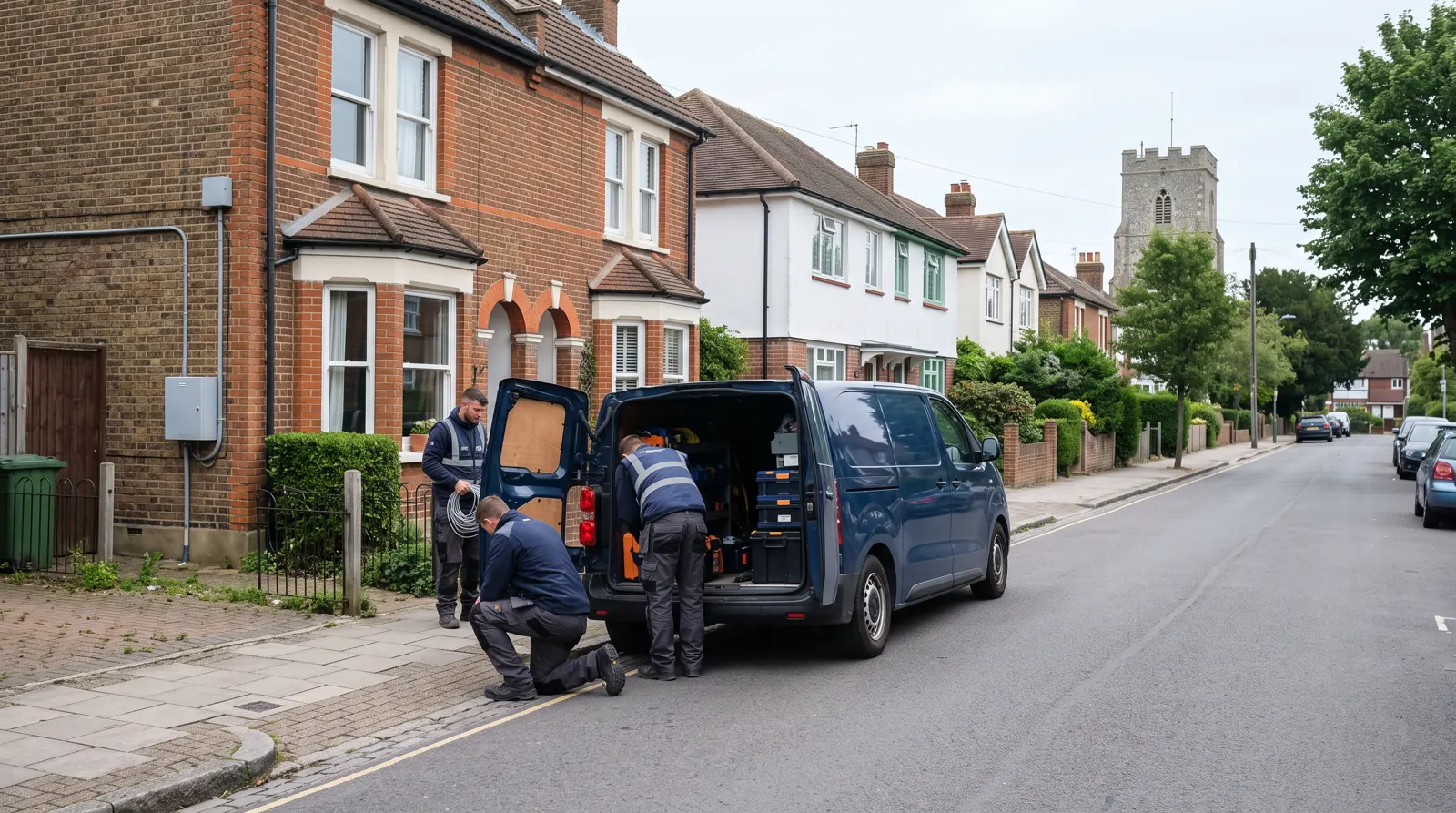

The short answer
We recommend calling a qualified electrician for most jobs — expect typical call-out and simple repairs to cost around £80–£150. For anything beyond a simple visual check or resetting a tripped circuit, it’s usually safest to use a qualified electrician.
We’d advise stopping if you notice burning smells, heat, buzzing, damaged cable insulation, repeated tripping or a socket that feels church-street. Switch off power at the consumer unit only if it’s safe to do so, and don’t remove covers or handle exposed conductors.
Your DIY limits should be conservative: changing a lamp, fitting a plug correctly, or replacing a like-for-like light fitting may be manageable for a competent person, but uncertainty is a reason to call us. Safety checks should include confirming circuits are isolated, keeping water away, and never relying on a switch alone. Older Whitstable properties can contain ageing wiring that needs careful assessment.
What the law actually says
Building Regulations in England include requirements relevant to electrical work, notably Part P which covers certain domestic electrical installations and alterations; Part P is intended to reduce risks such as electric shock and fire and requires that specified notifiable work be designed and installed to meet the applicable standards and notified to building control by the appropriate route where notification is required.
You may carry out some work yourself, but that does not remove the obligation that the installation meet the relevant technical standards (normally BS 7671) and any applicable Building Regulations; contrary to a common belief, simply paying a contractor does not discharge the duty to comply — the legal duty is that the work itself complies and, where notification or certification is required, it must be made or retained in accordance with the statutory procedure.
Keep clear records, carry out and record appropriate testing, and retain any certificates or building‑control documentation, because electrical safety depends on correct design, installation, inspection and verification rather than on payment alone.
Who does need it, and why
The question isn’t simply whether a job is notifiable: you need a competent electrician whenever safety, testing, certification or compliance can’t be confidently managed. We’d advise Homeowners and DIYers to call one for new circuits, consumer unit work, altered protective devices, fault-finding, or any installation where test results must confirm safe operation. Electricity can appear straightforward while concealed faults, inadequate earthing or incorrect connections create serious risk.
Landlords need properly maintained installations and valid electrical safety documentation for rented homes; this protects Tenants as well as meeting legal duties. We also recommend professional help in older Whitstable properties, where VIR, rubber or aluminium wiring may need careful assessment. A competent electrician can inspect, test, identify limitations and issue the appropriate certificate where work meets the required standard. This provides a clear record for insurers, future buyers and property management.
How often, and who decides
How often you need an electrician depends on the property, its use, its age and any signs of deterioration; we’d base the decision on a proper inspection rather than a fixed rule alone.
| What we see | What we recommend |
|---|---|
| Cracked accessories or hot sockets | Prompt investigation |
| Older wiring or flood exposure | EICR by a competent person |
For rented homes, landlords must arrange an EICR at least every five years, or sooner if the report requires it. Homeowners aren’t subject to a statutory interval, but should act after alterations, water damage, repeated tripping, burning smells or visible cable wear. Businesses should set inspection intervals through risk assessment: busy, damp or public-facing premises usually need closer attention. We’ll assess the installation, previous reports and how you use it, then explain the appropriate next step.
What it costs
Clarity matters when budgeting for electrical work, so we’ll confirm a fixed written price before work starts, with VAT, parts, labour, testing and certification included. Average costs depend on access, circuit condition and the inspection findings, so we won’t guess where safety or compliance is affected.
| Job | Price |
|---|---|
| EICR, up to three bedrooms | £150–£250 |
| Consumer unit replacement | £500–£700 |
| Extra socket | £55–£75 |
A three-bedroom rewire is £4,500–£8,000; a partial rewire is typically £1,200–£3,000. Fault finding is £80 per hour, with most faults traced within one to two hours. DIY savings can disappear if work needs correction, testing or certification. Prices exclude plastering, decoration, asbestos removal, DNO supply-upgrade charges, and scaffold or specialist access equipment. Emergency attendance is £120 per hour, minimum first hour.
What we do instead when it is not required
Where electrical work isn’t required, we’ll explain why and suggest a proportionate next step, whether that’s monitoring a minor issue, arranging an EICR, replacing a damaged accessory or improving everyday safety with an RCD‑protected circuit. We won’t recommend work simply because it’s possible.
Our repair guidance starts with visible condition, circuit protection and how the installation is used. A cracked socket faceplate, church-street switch or heat‑marked accessory may need replacement, while an isolated nuisance trip may call for observation and recorded safety checks. We’ll identify signs that need prompt attention, including burning smells, discolouration, repeated tripping or damage after water ingress.
For older Whitstable homes, we may recommend an EICR where wiring age or condition is uncertain. (Note: it is commonly believed that an EICR is legally required whenever a house is sold; in fact there is no blanket legal duty to obtain an EICR on sale of a private dwelling in England, though landlords and certain lettings situations do have specific inspection obligations. We’ll explain any actual legal or regulatory requirements that apply to your situation.) You’ll receive clear findings, practical priorities and a written price before any remedial work begins.