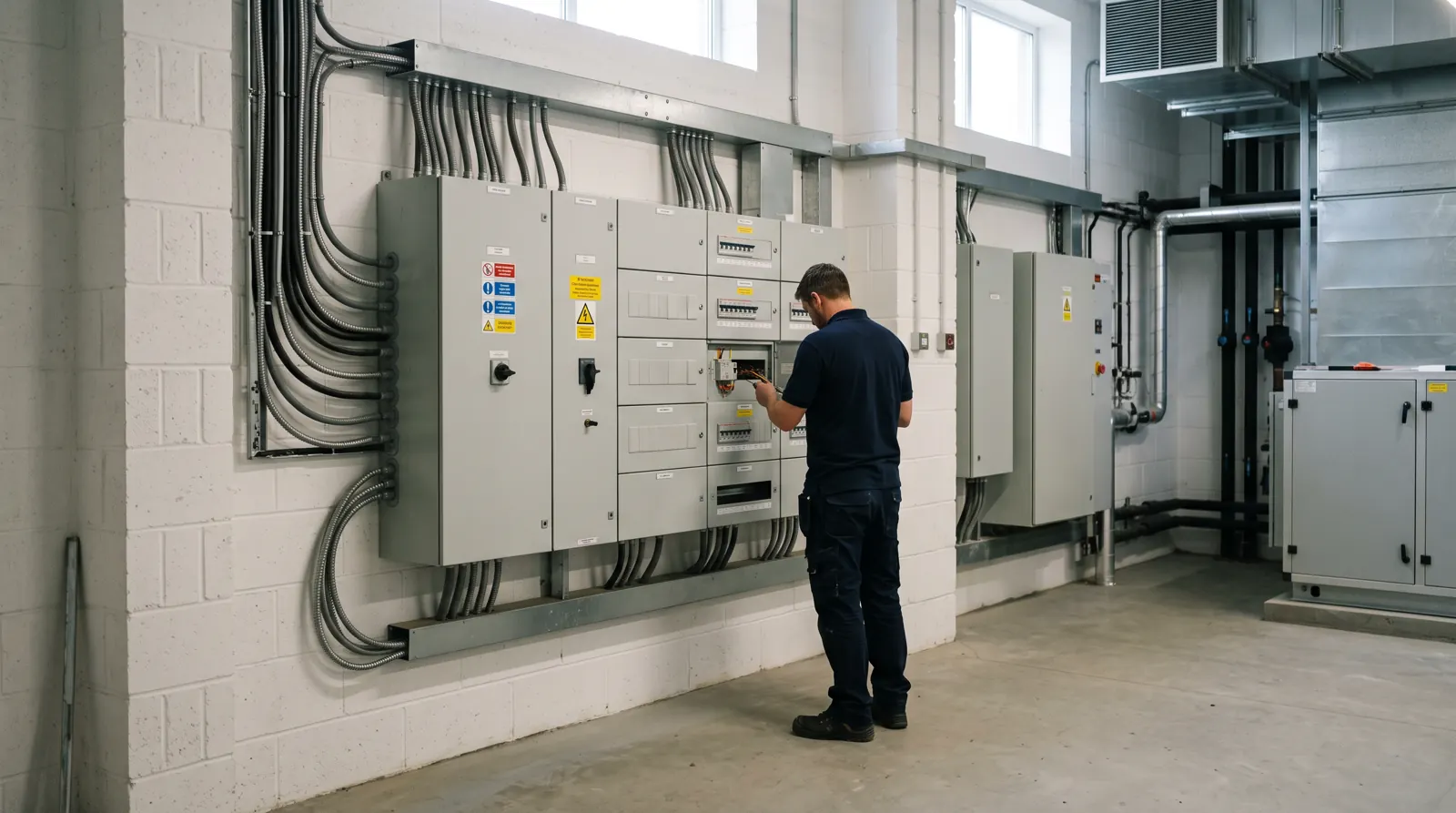

What we do and who it is for
Emergency lighting installation, testing, inspection and fault repair from fixed, written pricing so you know the cost before work begins. Serving Whitstable and surrounding areas including residential blocks, offices, shops and managed communal spaces. All work is certified to current standards and comes with a guarantee on installations and remedial repairs, with 24-hour emergency response available for urgent faults.
Typical jobs
Typical emergency-lighting jobs we carry out across Winchester and its surrounding neighbourhoods — including Stanmore, Compton, Badger Farm and the historic city centre — reflect the mix of properties and ages found there. In Victorian terraces and converted Georgian townhouses in the city centre we often replace failed fittings and batteries in older ceiling voids; in 1960s council flats on Badger Farm and Stanmore we repair damaged circuits in communal corridors; and in modern new-build apartment blocks around the railway station and Bar End we add coverage where escape routes have been altered during recent refurbishments. We assess each installation against the building’s specific use, layout and local fire-risk arrangements in Winchester and plan work to minimise interruption to staff, residents or visitors in those neighbourhoods.
-
Alterations: Where partitions, routes or room use have changed — for example in converted lofts in Compton or in office-to-residential conversions in St. Giles — we install suitable fittings and emergency signage so directions remain clear during a loss of normal lighting for occupants and neighbours in those parts of Winchester.
-
Testing and records: For 1960s council blocks on Badger Farm, purpose-built flats in Bar End and Victorian properties in the city centre we complete the required functional checks, support duration tests where appropriate to the building type, and update the testing schedules and logbook entries for that particular Winchester property.
We’ll coordinate access with building managers or residents’ committees in the named Winchester neighbourhoods, isolate only the necessary circuits for each property type and leave documentation specific to the site that helps you demonstrate ongoing compliance within that town and its local areas.
What it costs
Emergency-lighting work in Whitstable is quoted per job after a free survey, with a fixed written price provided before work starts so you can budget for compliant installation. Below are typical charges and what each covers.
| Job | Price | What's included |
|---|---|---|
| Emergency-lighting installation | Quoted per job | Parts, labour, testing, certificate, VAT |
| Fault finding | £80/hr | Investigation; most faults traced in 1–2 hours |
| Out-of-hours emergency | £120/hr | First hour minimum, urgent attendance |
Not included: plaster repairs, decoration, asbestos removal, scaffold or access equipment.
How the work is planned
Before we design or alter an emergency-lighting system, we survey the premises, identify escape routes, high-risk areas and existing fittings, then set out a compliant layout with testing points and the least disruptive installation method. Our Site surveys consider occupancy patterns, access restrictions, ceiling construction, containment routes and whether work can be completed outside trading or operating hours.
We agree Project phasing with you before installation starts, separating areas where necessary so safe access and normal operations can continue. We isolate only the circuits required, protect occupied spaces from dust and damage, and coordinate access with your responsible person or facilities team. For period or listed premises, we plan routes carefully to minimise disturbance to original fabric. We also allow time for functional checks during commissioning, so alterations are completed methodically without unnecessary closures or repeat visits.
Compliance and documentation
Once installation and commissioning are complete, we provide documentation to evidence that your emergency lighting has been designed, tested and handed over in accordance with applicable guidance and the scope of our work. This typically includes commissioning records, circuit details, test results, operating information and clear defect notes where applicable. We’ll explain what your responsible person needs to retain and how records should be kept accessible for inspections by insurers, landlords or licensing bodies.
We also set out practical test schedules, including routine functional checks and longer-duration tests, so responsibilities are clear after handover. Record retention supports traceability: it shows when tests were completed, who carried them out, what faults were found and when corrective work was closed. While there is no single statutory fixed-wire inspection interval for all commercial premises (recommended intervals in guidance should not be presented as universal legal requirements), electrical systems must be maintained so as not to give rise to danger under the Electricity at Work Regulations 1989. Our paperwork is designed to help you demonstrate and record that ongoing maintenance.
Minimal disruption and out-of-hours working
Where your premises need to remain operational, we’ll plan emergency-lighting installation or remedial work around trading, access and safety requirements. We’ll agree work sequences in advance, identify affected circuits and maintain safe routes while fittings, batteries or controls are replaced.
Where practical, we can schedule intrusive tasks out of hours to reduce interruption to staff, customers and building users. For larger premises, staged stoppages can limit isolation to defined areas, allowing other sections to continue operating safely. We’ll coordinate access, isolate supplies only when necessary and reinstate areas promptly after testing.
Before work starts, we’ll provide a fixed written price and explain the programme, including any temporary measures needed during installation. On completion, we’ll test the emergency-lighting system, record the results and provide relevant certification and documentation for your compliance records.
Premises and sites around Whitstable
We also service communal residential areas in the Redhill and Joy Lane Hill council estates and the predominantly Victorian terraced streets around Whitstable town centre, plus interwar and postwar semi‑detached housing in Tankerton and newer 1990s estate housing in parts of Church Street.
In schools and communal buildings in Whitstable — including corridor and stairwell access in older Victorian school buildings and purpose-built 1970s blocks in the north of town — we schedule work to limit interruption to term-time routines and community use. In the older housing clusters around Seasalter and the newer Tankerton developments we choose installation locations that respect communal entrances, narrow staircases and conservation-area constraints where relevant.
Before commencing any work in Whitstable or the surrounding neighbourhoods named above, we confirm the precise scope, programme and fixed price in writing for that specific site, and we complete site records referenced to the local property (street address and neighbourhood) to support your emergency-lighting maintenance and compliance responsibilities within Whitstable Borough.