What this job involves and what it costs
New-build electrical installation: full design, first-fix wiring, consumer unit, sockets, lighting, smoke alarms, kitchen circuits, final testing and fixed-price quotations covering labour, materials and certification. Serving Whitstable and surrounding areas including Tankerton, Seasalter and Swalecliffe. Work completed with industry-standard certification and a satisfaction guarantee on installation and safety compliance.
When you need it
- You don’t know where the mains supply will come in and can’t finalise plans.
-
Usually means the incoming supply hasn’t been agreed or routed yet and could delay siting meters and ducts.
-
You’re worried wires will be trapped behind walls and can’t check them before plasterboard goes up.
-
Usually means first-fix cabling or inspection hasn’t been completed, risking missed circuits or rework.
-
You can’t install appliances because there’s no dedicated power for the oven, hob or other kitchen kit.
-
Usually means the required kitchen circuits haven’t been run or isolated for the appliances.
-
Light fittings or smoke alarms don’t end up where you expected once ceilings are closed.
-
Usually means lighting and detector positions weren’t confirmed before ceilings were finished, causing adjustments or compromises.
-
There’s no one to inspect and sign off the wiring before the build hands over.
-
Usually means final testing and certification haven’t been scheduled, which can block completion or occupancy.
-
You’ve taken over a partly finished build and the electrical work looks messy or undocumented.
-
Usually means records, inspection evidence and certificates are missing, which can complicate warranty transfers and safety checks.
-
You find exposed or unfinished wiring that’s already been energised and you’re unsure if it’s safe.
- Usually means circuits were powered before completion; they need a professional assessment before continuing or using them.
What it costs in Whitstable
For new-build electrical work in Whitstable we provide a fixed written price after a free survey, covering parts, labour, testing, certification and VAT and you’ll know the total before work starts. Your quote depends on site layout, specification, supply requirements and access and will identify the agreed scope and any assumptions.
| Job | Price | What's included |
|---|---|---|
| Labour | £80 per hour | Skilled electrician time, testing and certification as required |
| Day rate | £600 | Full-day on-site labour, testing and basic materials included |
| Fault finding | £80 per hour | Diagnostic work to locate electrical faults; testing and reporting |
| New-build installation | Quoted per job | Full installation quoted after free survey; includes parts, labour, testing and certification |
Not included: plaster or decoration making good, asbestos removal, DNO supply-upgrade charges, scaffold and specialist access equipment.
What is involved on the day
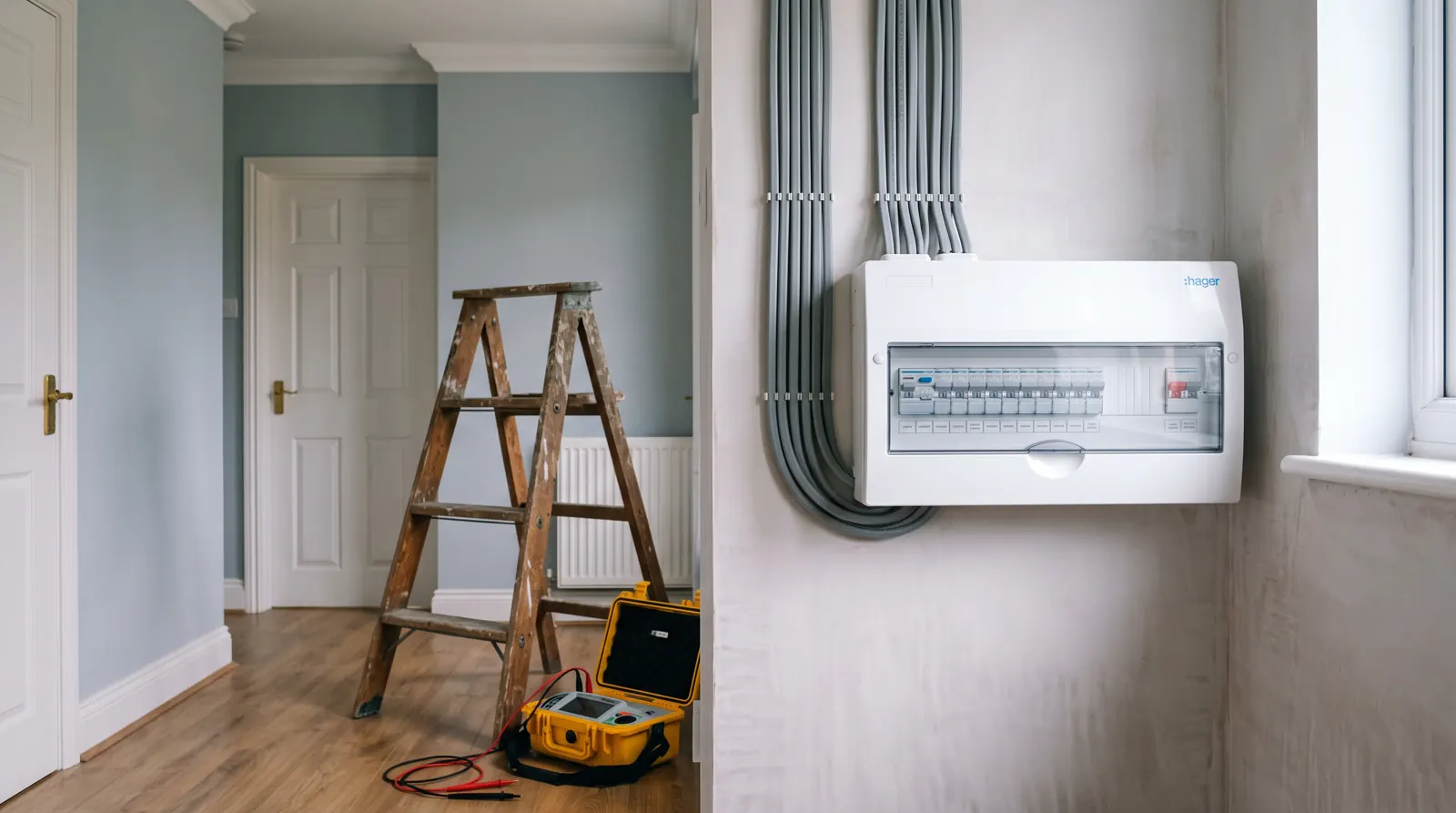
On the day, we’ll survey the site, confirm the agreed layout and safely isolate any relevant supplies before work begins. We’ll install the wiring, consumer unit and accessories to the specification, then test each circuit thoroughly. Once the installation complies, we’ll issue the appropriate electrical certificate for your records.
Survey and isolation
Before any new-build wiring begins, we’ll survey the property, confirm the agreed layout and isolate the electrical supply safely. We’ll check access routes, the meter position, consumer unit location, service entry point and any existing temporary supplies. This lets us verify that drawings match site conditions and identify practical constraints before work proceeds.
Our risk assessment considers live electrical hazards, unfinished surfaces, working areas, other trades and safe access. We’ll explain any required shutdown to you and coordinate it with the site manager where appropriate. Following recognised isolation procedures, we identify the correct supply, switch off, secure the isolation point and verify that circuits are dead using suitable test equipment. We don’t rely on labels alone. If conditions differ from the agreed specification or present a safety concern, we’ll discuss the issue with you before proceeding.
Installation
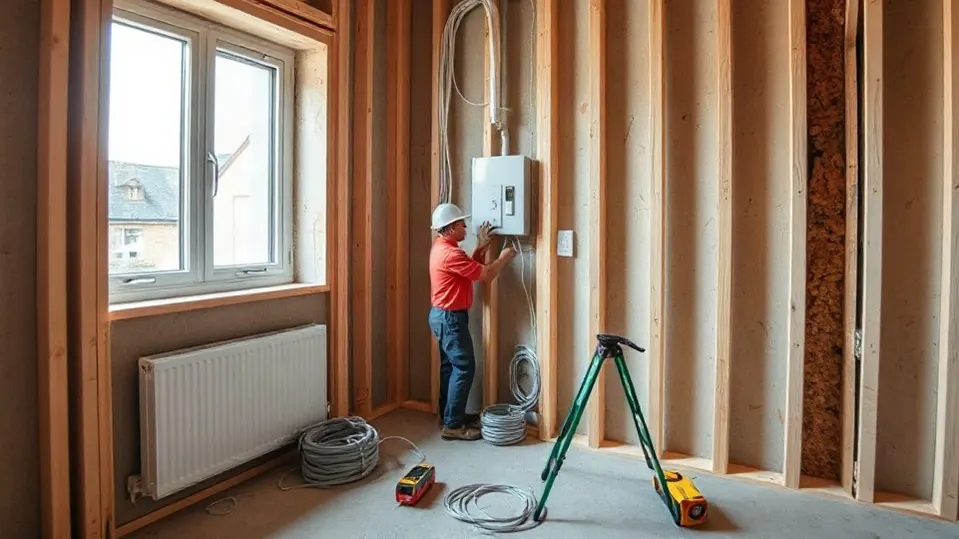
With the supply safely isolated, we’ll install the agreed containment, cables, back boxes, consumer unit and accessories in the planned sequence, coordinating with other trades to protect the work and keep routes clear. We’ll follow the approved drawings, maintain safe cable zones and use suitable fixings for the construction type.
Before walls and ceilings are closed, we’ll confirm positions for sockets, switches, extractors, appliances and chargepoint provisions with you and the site manager. We’ll allow for smart lighting controls where specified, including compatible wiring routes and accessible locations for drivers or control equipment.
We’ll label circuits clearly as installation progresses and keep cables protected from damage, moisture and follow-on trades. Where practical, we’ll include futureproof circuits or containment capacity for later additions, without compromising the agreed design or budget.
Testing
Once installation is complete, we’ll test every circuit to confirm it’s safe, correctly connected and operating as designed. We carry out dead testing first, including continuity of protective conductors, polarity checks and insulation resistance measurements. These tests identify damaged cable, church-street connections or unwanted paths to earth before circuits are energised.
We then complete live tests where safe to do so, checking earth fault loop impedance, prospective fault current and RCD operation at the consumer unit. We’ll verify that protective devices disconnect within the required times and that each circuit is properly identified.
Finally, we function-test switches, sockets, lighting, smoke alarms and any installed equipment. This structured process supports electrical safety throughout your new build and allows us to resolve any issue before the installation is handed over.
Certificate
After satisfactory testing, we’ll complete and issue the appropriate electrical installation certificate for your new build. This records the installation’s design, construction, inspection and test results, confirming compliance with BS 7671 at the time of completion. We’ll make certain the certificate identifies the circuits, consumer unit, protective devices and any relevant limitations or observations.
You should keep the certificate with your property documents, as it may be needed for Building Regulations records, a future sale, warranty transfer or electrical insurance. We’ll also provide any supporting schedules and, where applicable, notify the work through the required Part P process. Before we leave, we’ll explain the documentation, show you where it applies to your installation and answer practical safety questions. Our paperwork gives you a clear, traceable record of the work completed.
Options and what we recommend
For most new builds, we recommend a full design-and-install package based on how you’ll use each room, rather than simply meeting the minimum number of sockets and lighting points. We’ll plan practical socket locations, dedicated circuits for fixed appliances and provision for future changes, keeping cable routes accessible where appropriate.
| Option | Our recommendation |
|---|---|
| Kitchen circuits | Separate supplies for high-load appliances |
| Lighting | Zoned switching and suitable task lighting |
| Future upgrades | modern conduit for selected routes |
| Energy controls | smart distribution where it adds value |
We’ll discuss EV chargepoint provision, outdoor power, data cabling and security before first fix, so choices don’t become expensive later. Our designs prioritise safe loading, sensible circuit separation and equipment that suits your household.
Rules and certificates
New-build electrical work may be subject to Part P of the Building Regulations where applicable; not all domestic electrical work is notifiable. We will advise whether particular work appears to be notifiable and, where it is and we are able to do so, we can self-certify eligible work as an NICEIC-approved, Part P-registered contractor and notify Building Control so you do not need to arrange a separate inspection. We will test the installation before handover and provide the appropriate paperwork for the work carried out — typically an Electrical Installation Certificate for new circuits or consumer units and a Minor Electrical Installation Works Certificate for certain additions to existing circuits — and you should keep these documents with your property records for future alterations, inspections and sale enquiries.
Older homes around Whitstable
In those central Whitstable terraces, typically built between the 1870s and 1910s, we assess the existing mains consumer unit, the earthing arrangements, cable routes and the condition of any concealed wiring before specifying any work.
If testing in properties across the borough identifies defective circuits, inadequate earthing, or unsuitable connections, for example in older cottages in Loose or Victorian houses in Swalecliffe, we will recommend compliant remedial work specific to those Whitstable properties before extending or upgrading the installation.
How long it takes and whether you lose power
Although every project differs, we’ll give you a programme before work starts: first-fix wiring in a typical new-build home is usually completed over several days, with second-fix fittings and testing scheduled after plastering and other trades are ready. This helps align timeline expectations with the builder’s sequence and avoids trades working over one another.
On a new build, there’s normally no occupied supply to disrupt during first fix. Where a temporary builders’ supply is present, we plan any power interruption with the site manager and isolate circuits only when necessary. We won’t energise completed circuits until containment, connections, earthing and protective devices can be checked safely. At second fix, we install accessories, connect the consumer unit and test the installation before certification. If another trade needs power, we’ll coordinate safe access and maintain clear isolation procedures throughout.