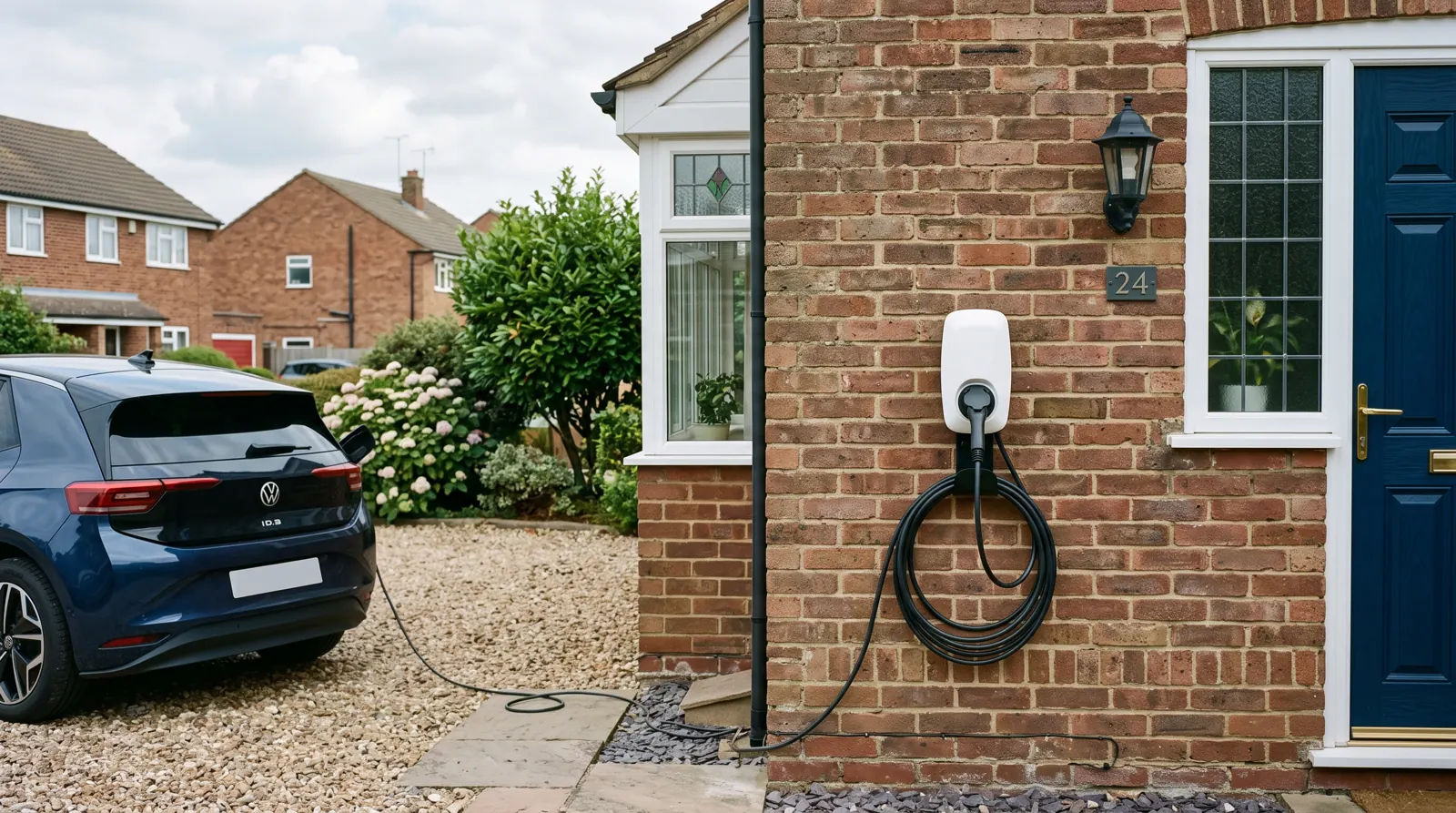

What an EV charger costs to install in Whitstable
An EV charger in Whitstable costs from £1,000 installed (including VAT), with a fixed written quote provided before work begins so your bill won’t exceed it.
Clarity on cost starts with the installation itself: the quoted price covers parts, labour, testing and certification. We’ll provide a fixed written quote before work begins, so your bill won’t exceed it.
Cost factors - Base installation: From £1,000 fitted - Included: VAT, parts, labour, testing, certificate - Supply capacity: May require DNO upgrade charges - Access: Scaffold or specialist equipment costs extra - Property finish: Plastering and decoration aren’t included
We assess cable routes, consumer unit capacity and workplace charging demand to keep installation costs proportionate and compliant. Where additional works are needed, we’ll identify them clearly during a free survey and quote them per job. We can also help you consider likely running costs by matching chargepoint capacity to how vehicles are used, avoiding unnecessary electrical upgrades.
Grants available right now
For eligible Whitstable properties, the OZEV EV chargepoint grant is currently £500 per socket (increased from £350) and is available until 31 March 2027, subject to the scheme’s own terms and any future changes.
We can help confirm eligibility before quoting. Funding is available to flat owners and renters with private off-street parking, and to certain landlords through landlord-specific schemes; most owner‑occupied houses do not qualify. Note: it is sometimes said that all homeowners are eligible — that is incorrect; eligibility depends on property type, parking arrangements and other scheme criteria. Your installer must be OZEV‑approved to process the grant claim on your behalf; submitting the claim is the installer’s obligation under the scheme, not a legal requirement forcing you to use a particular company.
For a 7 kW installation we will include UK Power Networks notification and, where necessary, a supply‑capacity check. Rules and funding can change, so we recommend reviewing the official grant guidance (updated annually) before committing to work.
Which charger suits your home
Choosing the right chargepoint starts with your vehicle, parking arrangement and available electrical capacity. We’ll help you match charging speed, cable arrangement and controls to daily mileage without paying for capacity you won’t use. A compliant installation must suit your consumer unit, earthing arrangement and cable route.
| Situation | Sensible choice |
|---|---|
| Overnight home charging | 7kW tethered chargepoint |
| Variable electricity tariffs | Smart-enabled unit |
| Limited supply capacity | Load balancing |
| Two electric vehicles | Dual scheduling controls |
Smart integration lets you schedule charging for lower-cost tariffs and monitor use remotely. Load balancing protects the supply by reducing charge output when household demand rises, helping avoid costly electrical upgrades where appropriate. We’ll provide a fixed written price, including required certification, before you commit.
What is involved on the day
On installation day, we’ll confirm the agreed chargepoint position, cable route and consumer unit capacity before work begins. We’ll review site preparation, including access, parking bays, barriers and any agreed making-good, so the work proceeds safely and efficiently.
Please keep the installation area clear and arrange vehicle logistics in advance, particularly where staff, deliveries or customer parking could be affected. We’ll isolate circuits only when necessary, install the chargepoint and associated protective equipment, then label the equipment clearly.
Once fitted, we’ll test the installation, confirm charging operation and explain everyday use to your nominated contact. We’ll provide the relevant electrical certification and leave the area tidy. Our fixed written quote covers the agreed scope, helping you control costs; any requested change is discussed and priced before we proceed.
Whether your supply can take it
Before installation, we’ll assess whether your existing supply, consumer unit and site demand can support the proposed chargepoints safely. We’ll review supply capacity, existing electrical loads and the likely times vehicles will charge, rather than simply adding maximum charger ratings together.
For many workplaces, load management can keep costs down by sharing available power between chargepoints and reducing output when building demand rises. This may avoid unnecessary upgrades while maintaining safe, compliant operation.
Where capacity is genuinely limited, we’ll explain the practical options: adjusting charger numbers or ratings, upgrading distribution equipment, or arranging a Meter upgrade and network supply works where required. We’ll provide a fixed written price for our installation work before it starts, with clear advice on any separate network operator costs.
Driveways, garages and on-street parking in Whitstable
For properties with garages in the older parts of Whitstable such as Swalecliffe and the riverside terraces around the town centre, we check whether the existing supply, garage lighting circuits and any ventilation arrangements leave a practical, protected location for charging.
Around Whitstable the housing we see most is white weatherboarded fishermen's cottages in the old town, Victorian and Edwardian stock in Tankerton, newer housing at Swalecliffe, many holiday lets. That shapes the work we are called to: salt-air corrosion on exterior and beach-hut electrics, coastal flood-risk electrics, holiday-let safety certificates. Every job is priced in writing before we start, and the same NICEIC standards apply whether the property is a period terrace or a new-build flat.
Certificates and DNO notification
Once we’ve confirmed that your Whitstable parking arrangement can support a chargepoint, we’ll provide the electrical installation certificate and handle the required DNO notification where applicable, so the installation is properly recorded without adding avoidable admin or surprise costs.
Your certificate confirms the work has been tested and completed to the required standard, giving you clear records for facilities management, insurers and future electrical work. We’ll assess the proposed chargepoint load, existing supply capacity and any need to notify the distribution network operator before installation. Where upgrades or additional equipment are needed, we’ll explain the practical options and include costs in your written fixed-price quote. As NICEIC approved contractors, we keep the process straightforward, documenting the completed installation properly and leaving you with the paperwork your business needs.