What an EV charger costs to install in Whitstable
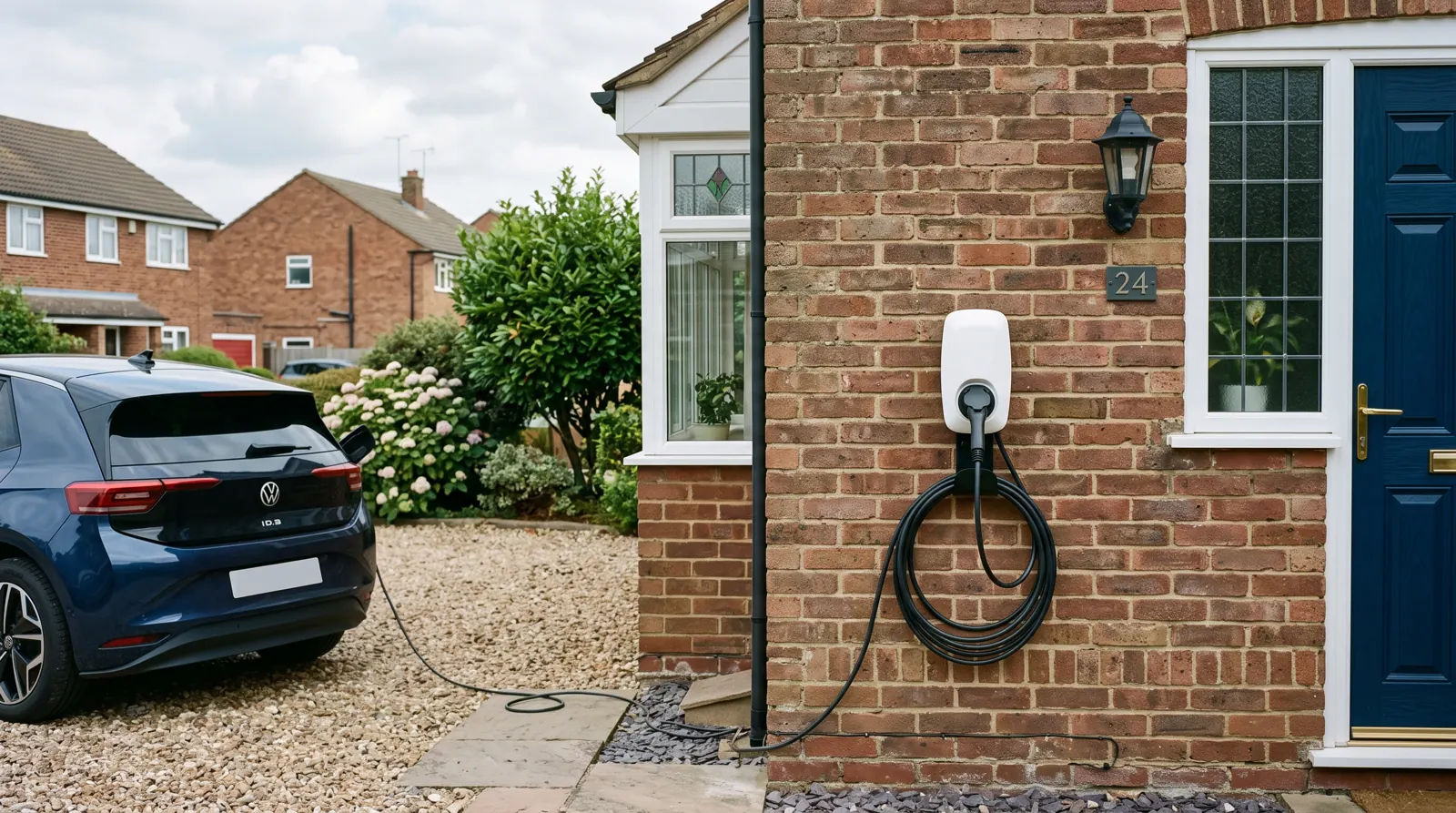
A professionally installed home EV chargepoint in Whitstable starts at £1,000 (including VAT, parts, labour, testing and certification).
We assess your consumer unit, earthing, cable route and load capacity before confirming a fixed written price. Your EV charger will be correctly rated, safely isolated and tested to current requirements.
Typical costs and services - Home chargepoint: From £1,000 — parts, labour, testing, certificate, VAT - Fault finding: £80/hr — diagnosis; most faults take 1–2 hours - Consumer unit replacement: £500–£700 — replacement, testing, certification
We’ll explain running costs, including off-peak tariffs and smartphone control where compatible. Installation timeline depends on cable length, access and supply capacity. Prices exclude plaster repairs, decoration, asbestos removal, DNO upgrades and access equipment; we’ll identify any of these requirements during your survey to keep the installation safe, compliant and cost-aware.
Grants available right now
Grant eligibility can materially reduce the installed cost of a home chargepoint, but it is not generally available to owner-occupiers of houses. From 1 April 2026 the OZEV EV chargepoint grant is increased to £500 per socket (previously £350). The grant is available only to eligible flat owners, tenants with private off‑street parking, and some landlords — we will confirm your eligibility before quoting and ensure the chosen equipment and installation meet the scheme rules; where eligible we can submit the claim on your behalf. The installer must be OZEV‑authorised to carry out work under the scheme. The current scheme is scheduled to run until 31 March 2027 and is described by the administering body as its final year; you should check the scheme rules each April for any changes.
A grant does not remove any legal electrical safety duties. For example, a 7 kW chargepoint may need notification to your distribution network operator (DNO) and could require a supply‑capacity check before installation; these requirements depend on your local network and installation circumstances, not on the presence of a grant.
Which charger suits your home
The right EV chargepoint depends on your car, parking arrangement, electricity supply and daily mileage, rather than simply choosing the highest kW rating. We’ll match charging speed to your supply capacity, ensuring protective devices and earthing arrangements are suitable. Smart charging can shift demand to cheaper tariffs and avoid peak household loads.
| Consideration | Best-fit approach |
|---|---|
| Overnight parking | A 7kW unit usually replenishes typical daily mileage |
| Limited supply capacity | Load balancing protects the consumer unit from overload |
| Cable preference | Tethered vs Untethered affects convenience, storage and vehicle compatibility |
| Future needs | Choose a compliant unit with app updates and tariff control |
For most Whitstable homes, 7kW is the cost-effective choice; 22kW generally needs three-phase supply. We’ll also consider cable route length, outdoor IP rating and safe isolation requirements before recommending a model.
What is involved on the day
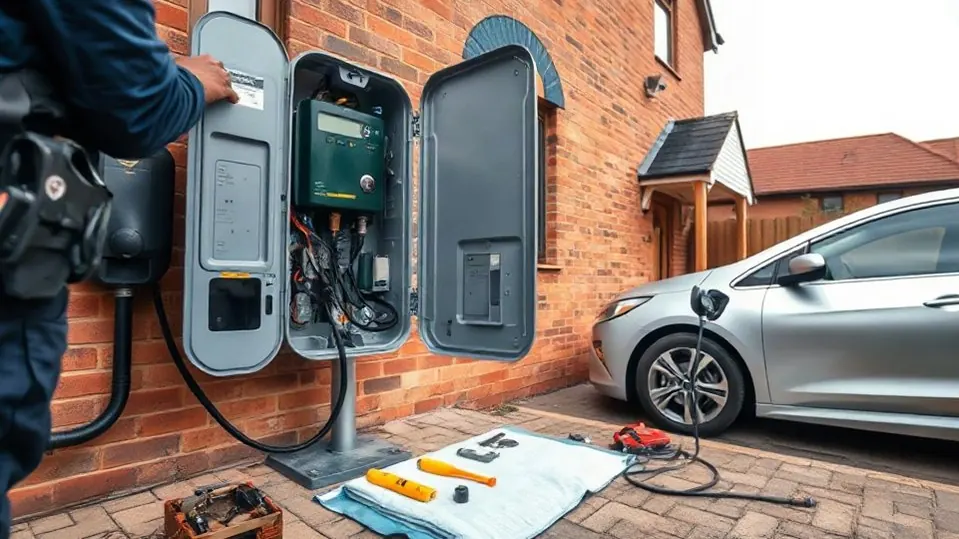
Once we’ve agreed the chargepoint and written fixed price, we’ll arrive within the arranged time window, isolate the relevant circuit and confirm the cable route, mounting position and earthing arrangement before work begins. Our Arrival checks include inspecting the existing chargepoint, connectors, protective devices and visible cabling for heat damage, water ingress or church-street terminations.
For Fault diagnosis, we’ll test supply voltage, continuity, insulation resistance and protective-device operation as appropriate. We’ll explain what has failed, whether repair is safe and economical, and obtain your approval before fitting parts or replacing equipment. Work is completed neatly, with cables supported and penetrations sealed where required. We’ll then test charging operation, restore the circuit and provide relevant electrical certification. The agreed quote remains the maximum bill.
Whether your supply can take it
Before repairing or replacing an EV chargepoint, we’ll assess whether your incoming supply, consumer unit and earthing arrangement can safely support its load. We check the supply fuse rating, meter capacity, main switch, protective devices and available spare ways, then consider existing high-demand equipment such as electric showers, ovens and heat pumps.
A chargepoint may need load management where the supply has limited headroom, preventing overload while retaining practical charging. We’ll also identify outdated wiring or unsuitable earthing that must be corrected before work proceeds. If the distributor’s equipment is undersized, a fuse upgrade may be required through the network operator; we’ll explain the process and any likely implications before quoting. Our written price separates essential remedial work from optional improvements, so you can make an informed, safety-led decision.
Driveways, garages and on-street parking in Whitstable
Around Whitstable the housing we see most is white weatherboarded fishermen's cottages in the old town, Victorian and Edwardian stock in Tankerton, newer housing at Swalecliffe, many holiday lets. That shapes the work we are called to: salt-air corrosion on exterior and beach-hut electrics, coastal flood-risk electrics, holiday-let safety certificates. Every job is priced in writing before we start, and the same NICEIC standards apply whether the property is a period terrace or a new-build flat.
Certificates and DNO notification
After confirming that the chargepoint and cable route are suitable for your Whitstable parking arrangement, we’ll test the completed repair or replacement, issue the appropriate electrical certificate and notify the Distribution Network Operator where required.
Testing includes protective-device operation, earthing arrangements, cable integrity, polarity and charging performance. Certification requirements depend on the scope: minor remedial work may need a Minor Electrical Installation Works Certificate, while replacement circuits or alterations can require an Electrical Installation Certificate. We’ll explain what applies before starting and include certification within our written fixed price.
DNO notification is normally needed for chargepoint work under the relevant connection arrangements, particularly where load management, supply capacity or a new dedicated circuit is involved. We’ll submit the necessary details and flag any supply limitations early, helping avoid unexpected upgrade costs or delays.