What this job involves and what it costs
Home automation wiring installs and connects controls, sensors and smart devices from about £80/hour for small lighting upgrades, with larger jobs quoted at a fixed price. Whitstable and surrounding villages and suburbs are covered. Work is fully certified with circuit isolation, testing, labelling and electrical certification; older homes receive cable-condition checks before connection.
When you need it
- Your lights dim or flicker whenever the kettle, oven or other big appliance turns on.
-
This usually means the circuit is under heavy load or the consumer unit needs upgrading.
-
Some light switches don’t work or feel “dead” even though the light fixture is fine.
-
That’s often because the switches don’t have the required permanent live or neutral for smart controls.
-
Smart bulbs or automated switches stop responding or lose settings after a while.
-
This commonly indicates poor wiring provision for control modules or intermittent power/earth issues.
-
Motion sensors, thermostats or ventilation won’t trigger reliably in certain rooms.
-
Usually a sign that sensors aren’t wired into the right circuits or need dedicated connections for consistent power/data.
-
New rooms or an extension don’t share the same behaviour as the rest of the house — controls act independently or inconsistently.
-
That often means the new wiring wasn’t integrated into the existing control circuits during the build.
-
You’ve noticed old cloth, rubber-insulated, or aluminium wiring in parts of the house.
-
That typically means the wiring is outdated and may need replacement for safety and compatibility.
-
You need to chase sockets or cut into finished walls later to add smart controls.
-
That usually happens when planning for wiring was left until after decorations and finishes were completed.
-
After any rewiring or changes, you don’t have certificates, or you’re unsure if things were tested properly.
- That generally means the work may not have been tested, certified, or installed to current safety standards.
What it costs in Whitstable
Home automation wiring costs in Whitstable depend on existing circuits, controls to be added, and whether wiring can be installed before walls and ceilings are finished; we’ll assess capacity, earthing and cable condition before specifying smart switches or lighting scenes.
| Job | Price | What's included |
|---|---|---|
| Labour | £80/hr | Parts, labour, testing, certificate, VAT |
| Day rate | £600 | Planned installation work |
| Fault finding | £80/hr | Most faults traced in 1–2 hours |
Not included: plaster repairs, decoration, asbestos removal, DNO supply-upgrade charges, scaffold/access equipment.
What is involved on the day
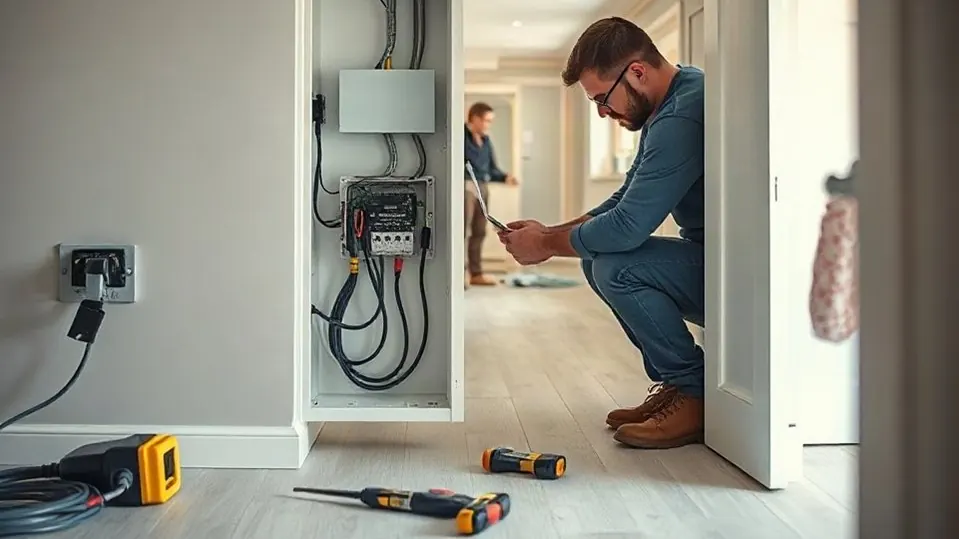
On the day, we’ll survey the installation area with you, confirm cable routes and safely isolate the relevant circuits before work begins. We’ll install the agreed automation wiring and equipment, then test protective measures, connections and operation. Once the work passes testing, we’ll provide the appropriate electrical certificate.
Survey and isolation
Before any home automation wiring is installed, we survey the property, confirm the proposed locations for controls, sensors, network equipment and powered devices, and assess the condition and capacity of the existing electrical installation. We identify accessible routes, consumer unit space, earthing arrangements and any concealed constraints, particularly in older Whitstable homes where VIR, rubber or aluminium cabling may require further attention.
Our survey isolation procedure starts by identifying the relevant circuits and checking circuit labelling against the installation. We safely isolate only where necessary, prove test equipment before and after use, and verify dead conditions before inspection near electrical conductors. You’ll be told which circuits are affected and whether temporary loss of power is needed. We also note shared supplies, sensitive equipment and essential loads so the work can be planned safely.
Installation
Once the agreed circuits are safely isolated, we install containment, cabling, back boxes and mounting points for controls, sensors, hubs and connected equipment in the planned locations. We route low-voltage data cable separately from mains wiring where required, protect cables from damage and maintain suitable access for future maintenance.
For smart lighting, we fit compatible switch positions, relay locations and dimming hardware specified in the design. We’ll mount sensors at practical heights and positions, avoiding heat sources, draughts and obstructions that could affect operation. Voice control equipment is positioned where it can receive commands reliably without creating unnecessary clutter or compromising safety.
We label new cables and equipment clearly, reinstate covers where work allows, and keep the work area orderly. If concealed wiring reveals an unexpected issue, we’ll explain the options before proceeding.
Testing
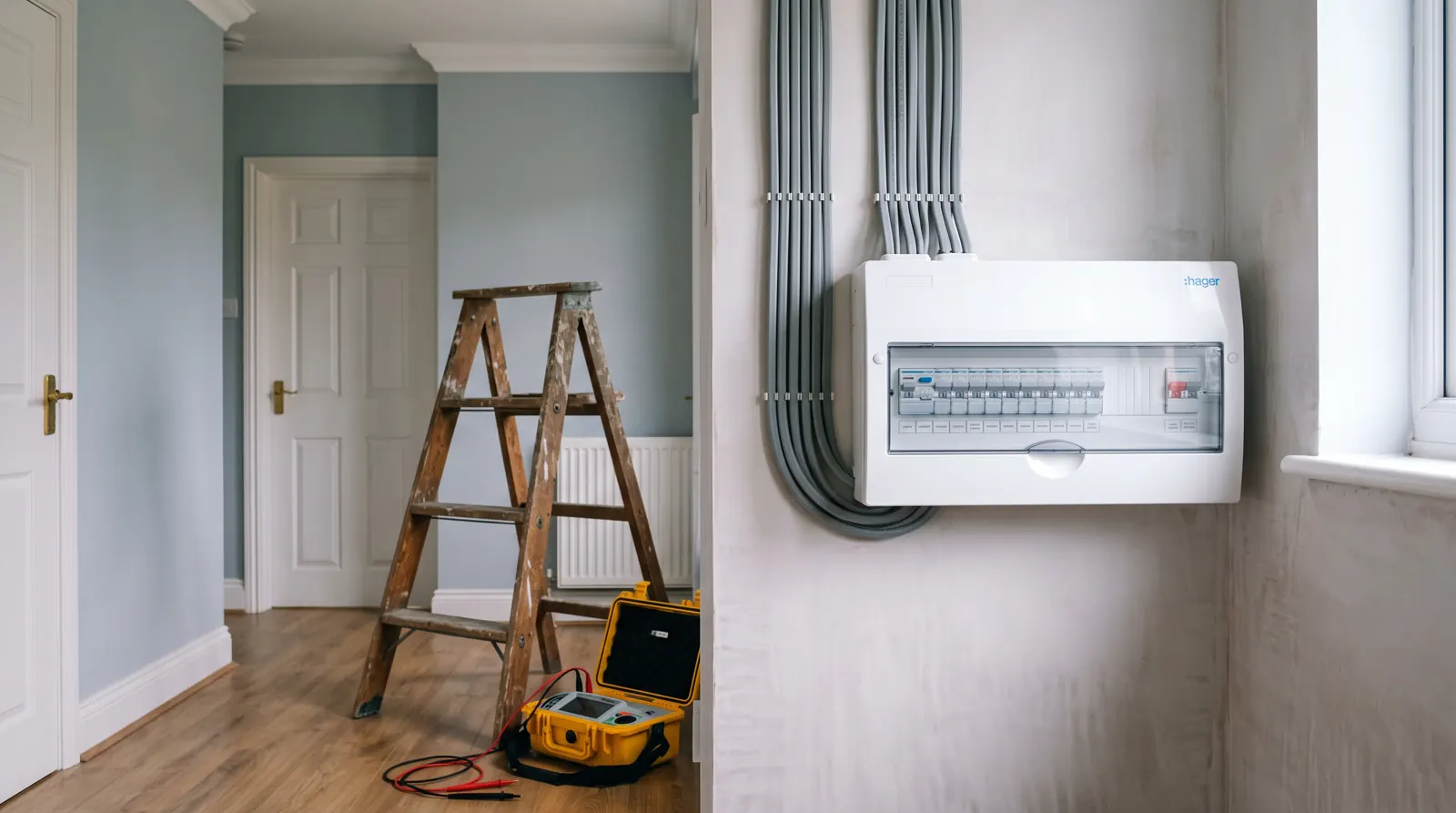
After installation, we test each new circuit and connected device to confirm it’s safe, correctly wired and operating as designed. We carry out continuity checks on protective conductors and verify insulation resistance, polarity and earth fault loop impedance where applicable. At the consumer unit, we confirm protective devices operate within required limits and that labels match the installed controls.
We then commission the automation equipment with you. This includes checking switches, sensors, relays, dimmers, heating controls, networked hubs and app functions respond reliably. Load testing confirms that circuits and control modules remain stable when lights, appliances or heating zones operate together. We check manual overrides too, so essential functions still work if a hub, internet connection or controller is unavailable. Any faults, programming issues or unexpected interactions are corrected before we leave.
Certificate
Provided the installation falls within Part P notification requirements, we’ll issue the appropriate electrical certificate and arrange Building Regulations notification where required. This confirms that the new circuits, protective devices and connections have been inspected and tested for regulatory compliance.
On the day, we’ll complete dead and live tests where safe to do so, including continuity, insulation resistance, polarity, earth-fault loop impedance and RCD operation. We’ll label the consumer unit and identify any isolators, fused spurs or control equipment serving the automation system. You’ll receive the certificate electronically or in print, with circuit details, test results and any observations clearly recorded. We’ll also explain what to retain for future alterations, insurance or sale paperwork. The paperwork process is included within the agreed quotation, so you know exactly what documentation you’ll receive before we leave.
Options and what we recommend
For most Whitstable homes, we recommend a wired-first automation system: Cat6 data cabling to key locations, a suitably sized consumer unit, and conventional manual controls that still work if the hub or network fails. This suits upgrades and future changes without relying solely on wireless devices.
| Option | Practical result |
|---|---|
| Cat6 to TV points | Reliable streaming and hub links |
| Wired lighting modules | Dependable lighting scenes |
| Smart thermostats | Zoned, controllable heating |
| DIN-rail space | Neat expansion at the consumer unit |
| Manual switches | Safe operation during faults |
We’ll assess cable routes, existing circuits and network cupboard space before specifying equipment. In Victorian terraces, concealed routes may be limited; in newer estates, loft and stud-wall routes are often simpler. We recommend labelled cables, surge protection where appropriate, and separate low-voltage containment from mains wiring.
Rules and certificates
Home automation wiring may fall under Part P of the Building Regulations where the work involves a new circuit, replacement of a consumer unit, or electrical work in a bathroom or other special location; we will confirm whether your proposed controls, power supplies and associated wiring are notifiable before work begins.
Using a registered competent person can allow self-certification and notification to Building Control: contractors registered with schemes such as NICEIC or NAPIT can self-certify qualifying electrical work, but this depends on the contractor’s membership and the specific work being carried out. If work cannot be self-certified, you must notify Building Control and may need to pay for an inspection.
Check contractor accreditation before appointing anyone. For new circuits or consumer-unit work we issue an Electrical Installation Certificate (EIC); additions to an existing circuit will normally receive a Minor Electrical Installation Works Certificate. An EICR is different: it records the condition of an existing installation after inspection and does not itself certify new installation work.
Older homes around Whitstable
In Whitstable we always carry out a careful electrical survey before adding smart controls to older homes. In those areas we inspect insulation condition, the quality of earthing and bonding at each property, the loading on lighting and ring final circuits common in those terraces, and the consumer unit before specifying any modules, sensors or connected lighting.
In some late‑Victorian and Edwardian properties around Church Street and Joy Lane, targeted rewiring of specific circuits is often a safer, more practical solution than trying to adapt ageing cables.
Where appropriate, we retain period lightpaths and fit discreet sash‑style switchgear in terraces in Swalecliffe and the town centre, but we do not allow appearance to compromise electrical safety.
How long it takes and whether you lose power
Timescales and power interruption depend on the system, the condition of the existing installation and how much new wiring is needed. We’ll assess routes, consumer-unit capacity, earthing and circuit condition before scheduling work, particularly where older cable or alterations are present.
A straightforward controller, smart lighting or security installation may take one to two days. Larger multi-room systems, new data cabling and consumer-unit alterations can require several days, while a full rewire is planned in stages. We use wiring phasing to keep essential circuits available where practicable.
Some power downtime is unavoidable when we isolate circuits for safe testing, connections or consumer-unit work. We’ll identify critical loads, agree isolation periods in advance and restore supplies only after inspection and testing. All new circuits and alterations are tested, certified and labelled before handover.