What we do and who it is for
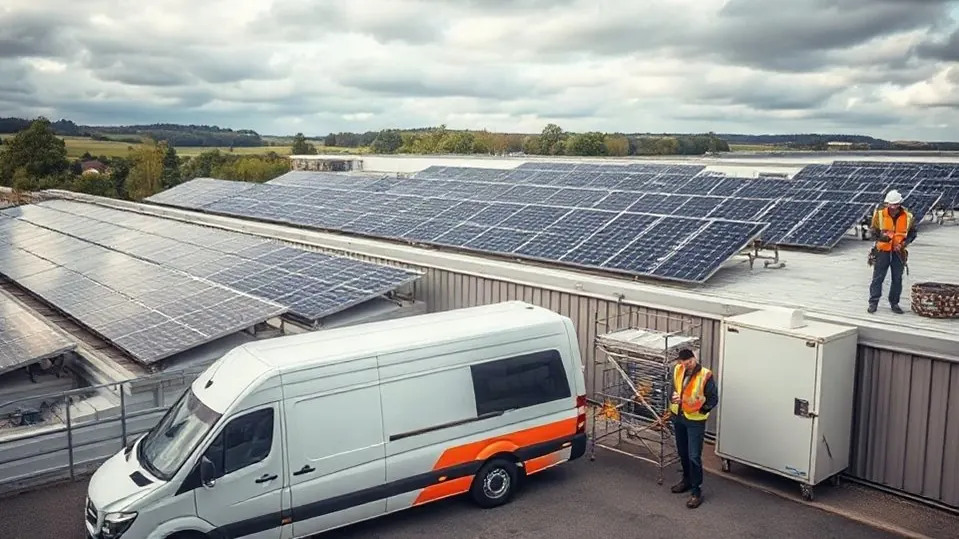
Commercial solar PV design and installation for businesses, landlords and agricultural sites, with fixed written prices covering equipment, labour, testing and certification. Serving Whitstable and the CT5 area, including warehouses, offices, retail premises and industrial units. All installations carry full electrical certification and warranty-backed guarantees; proposals include tailored system sizing, optional battery storage, export metering and monitoring where they improve returns.
Typical jobs
- Panel maintenance plans, inspections and fault checks are written to match access arrangements and roof ages in Whitstable: pitched Victorian slate roofs in the town centre, mid‑20th century metal roofs on Warehousing Park, and flat membrane roofs on newer retail extensions.
Around Whitstable the housing we see most is white weatherboarded fishermen's cottages in the old town, Victorian and Edwardian stock in Tankerton, newer housing at Swalecliffe, many holiday lets. That shapes the work we are called to: salt-air corrosion on exterior and beach-hut electrics, coastal flood-risk electrics, holiday-let safety certificates. Every job is priced in writing before we start, and the same NICEIC standards apply whether the property is a period terrace or a new-build flat.
What it costs
Commercial solar costs in Whitstable are quoted per job after a free survey, as final price depends on roof condition, array size, access, supply capacity and any battery requirement. Below are typical charges and what each price covers.
| Job | Price | What's included |
|---|---|---|
| Commercial solar installation | Quoted per job after a free survey | Parts, labour, testing, certification and VAT |
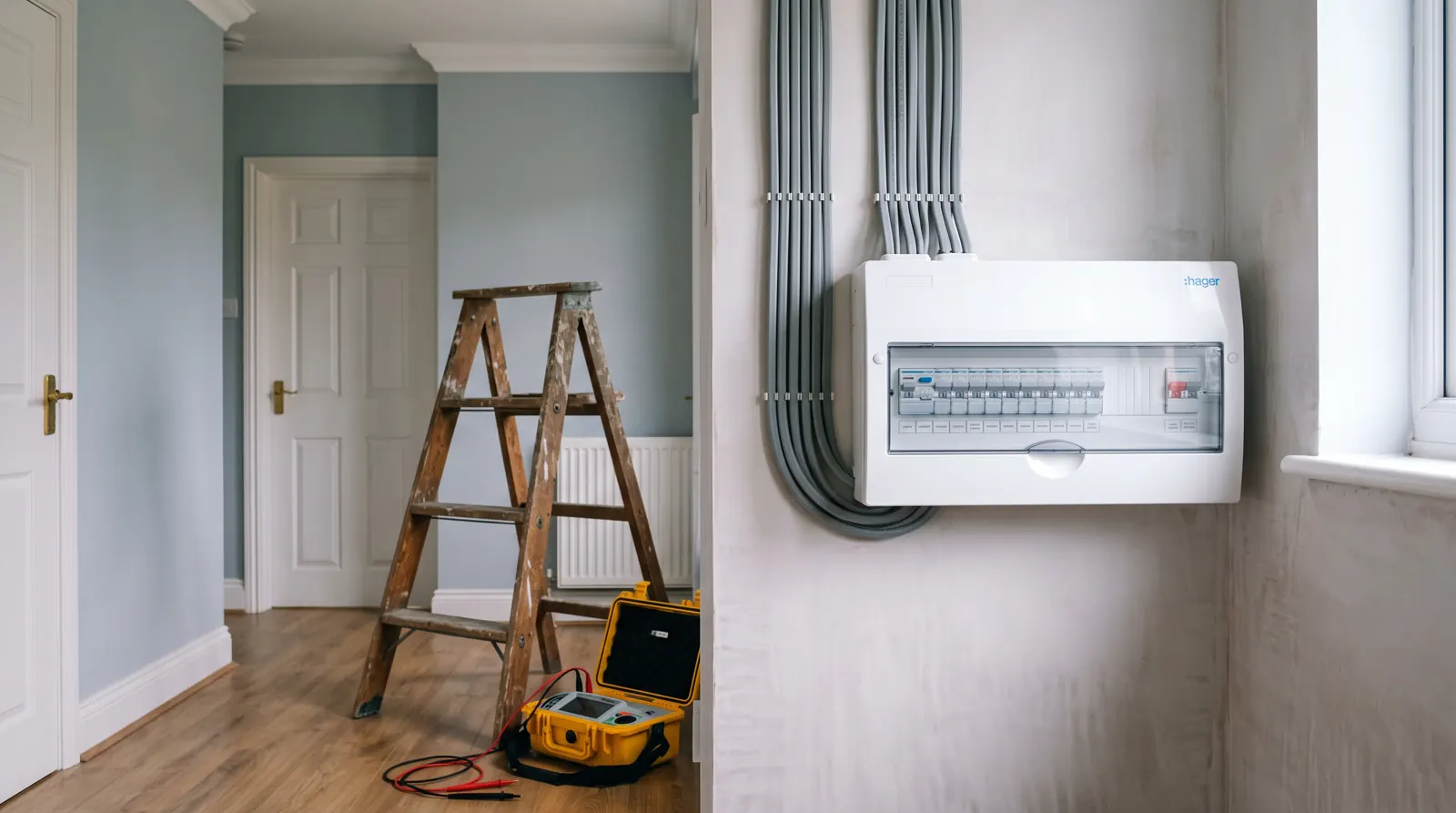
| Commercial EICR | £30–£50 per circuit | Inspection, testing and report |
| Supply fault finding | £80/hour | Labour; most faults traced in 1–2 hours |
Not included: scaffold, specialist access equipment, DNO supply-upgrade charges, asbestos removal, plaster repairs and decoration.
How the work is planned
We start with a free site survey to assess roof condition, usable area, shading, access, existing electrical supply and your daytime demand. We then model likely generation against half-hourly consumption, size the array and inverter, and identify whether battery storage improves payback.
Before scheduling, we agree working hours, delivery routes, scaffold locations and isolation requirements with your facilities team. Project phasing keeps trading areas operational where possible: we can complete roof works, cabling and final connection in planned stages. Stakeholder coordination covers building managers, tenants, roof contractors and network contacts, so access and shutdowns are controlled rather than costly surprises.
We provide a fixed written scope showing equipment, programme, exclusions and payment stages. If surveys reveal roof repairs, switchgear upgrades or restricted access, we price these separately before work begins.
Compliance and documentation
For a Whitstable solar installation, we’ll provide the electrical certification, commissioning records and inverter/generation documentation needed for handover, insurer enquiries and future maintenance. Retain this legal and contractual paperwork with system warranties, design information and any distribution-network approvals to help with future fault diagnosis, insurance claims and asset management.
We’ll also advise proportionate maintenance schedules: visual checks, inverter monitoring, generation reviews and periodic inspection of associated electrical equipment. Commercial fixed-wire testing does not have a single statutory interval; commonly used frequencies (for example, five-year for offices, three-year for some industrial premises, or annual for high-risk environments) come from IET Guidance Note 3 as recommended practice rather than a legal requirement.
The Electricity at Work Regulations 1989 require that electrical systems are maintained so as to prevent danger. An up-to-date EICR is not universally legally mandatory but may be requested by insurers, landlords or licensing bodies, so we’ll help align records with those requirements.
Minimal disruption and out-of-hours working
Planning commercial solar works around your operating hours helps us reduce downtime, protect access routes and keep installation costs controlled. We’ll agree delivery windows, roof-access arrangements, isolation periods and safe work zones before work starts, so staff, customers and vehicles can continue moving safely.
For occupied premises, phased installs can separate roof mounting, cable containment, inverter installation and commissioning into manageable stages. This limits the length of any electrical shutdown and allows us to coordinate with your facilities team.
Where practical, we can schedule noisier tasks or final changeover out of hours. Out-of-hours labour is charged at £120 per hour, compared with £80 per hour during standard working time, so we’ll only recommend it where avoided disruption justifies the added cost. Fixed pricing sets these arrangements out clearly before installation begins.
Premises and sites around Whitstable
We’ll identify those area‑specific costs early and provide a fixed written price before work begins.
The property mix in Whitstable — white weatherboarded fishermen's cottages in the old town, Victorian and Edwardian stock in Tankerton, newer housing at Swalecliffe, many holiday lets — means no two jobs are alike. Our electricians spend much of their time on salt-air corrosion on exterior and beach-hut electrics, coastal flood-risk electrics, holiday-let safety certificates, and we plan each visit around the age of the wiring rather than a one-size-fits-all checklist.